No Room For Drifting
Cambridge Art Association Fundraiser Sale
Last semester I took an art history class built around Baudelaire’s definition of the “flaneur” in relation to modernity. This figure is one who moves through the city anonymously, observing without participating, never belonging to the scene they are watching. Oftentimes when attending museums or gallery spaces, I feel a bit like a flâneur, drifting through rooms, watching people watch art, trying to understand a world I’m still learning the rules of.
Last week I volunteered at the Cambridge Art Association’s Spring Fundraiser expecting to embody that wandering spectator. Instead, I was absorbed into the community before I had the chance to observe it.
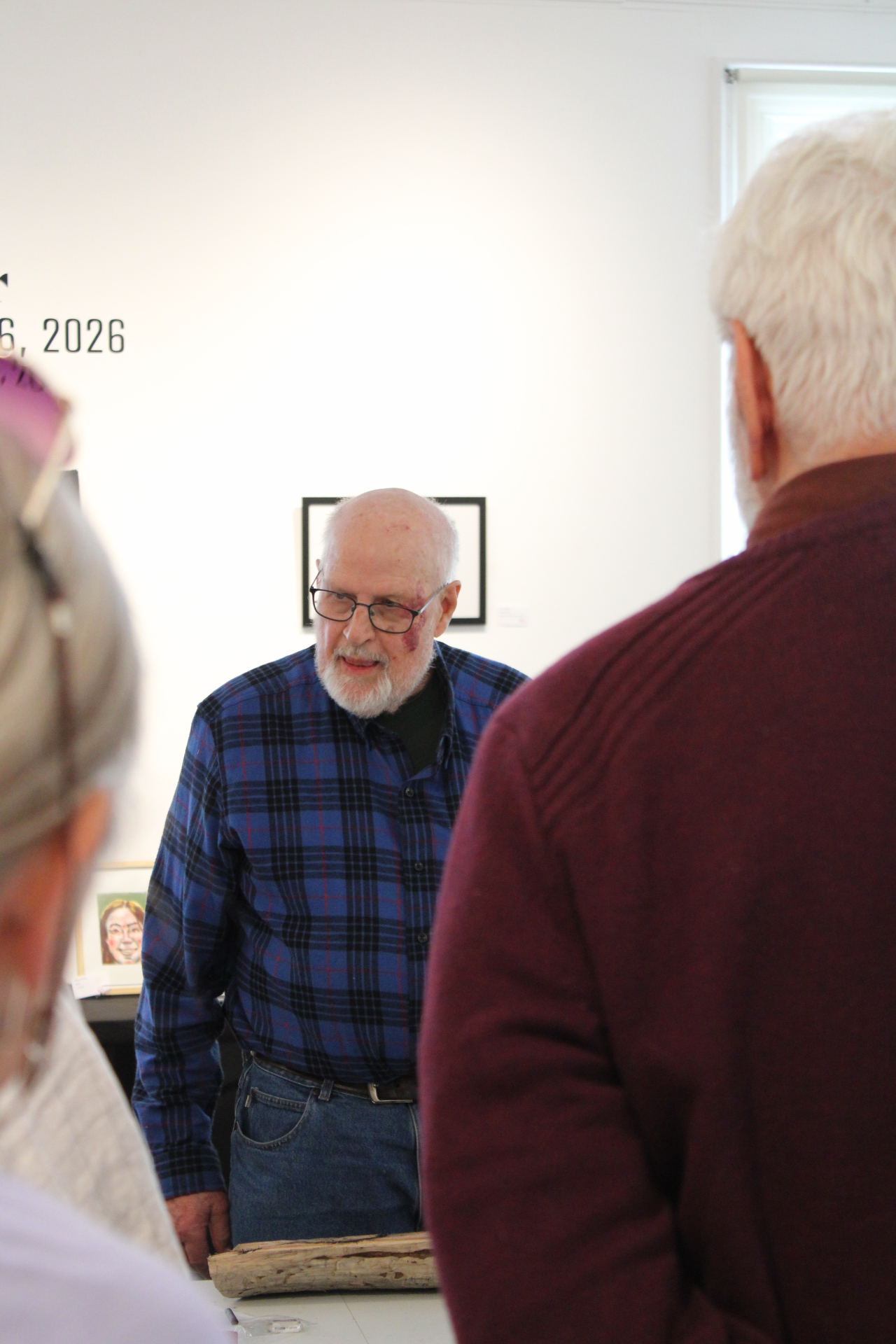
When I arrived, I was tasked with setting up the exhibition, answering any miscellaneous questions, and taking photos. To my surprise, the photography element of the experience was the most interesting. With my camera to my eye, the people around me left room for space. Few were coming up to me and asking questions or offering to tell me about their work, instead they were moving around me, letting me do my job. I was visible but purposeful, and purposeful in a way that amounts to its own kind of distance. With my camera, I felt like a kind of contemporary flâneur, looking in on the event from the outside, walking through the community without being fully immersed.

The next day, I left the camera in the car and instead walked around the room answering questions and helping organize the sales. The moment I put the camera down, people came right towards me.
The CAA is a small scale organization, it’s locally run and quietly supported by its community. It doesn’t really allow for detachment. Candice and Anna, the director and co-director, moved through the room like hosts at a dinner party, greeting everyone by name, pulling people into conversations. Members arrived and headed straight for each other, promising coffee the next week, updating each other’s numbers on their phones, catching up on things that had nothing to do with art and everything to do with the fact that art had brought them together in the first place. The artists weren’t standing nervously beside their work waiting to be approached but instead they were in the middle of it, talking, laughing, explaining.

The range of people surprised me. College students, middle-aged artists carrying a longtime passion for painting they’d never quite let go of, retired people who had finally built themselves a studio and were using it. All of them in the same room for the same reason.
So much work sold, and not just because it was good, but because people wanted the person who made it to keep going. I overheard a young artist joke to her friend that she was buying a piece instead of dinner that night. The fundraiser worked because the community wanted it to.
The classical flâneur belongs to the city because the city never asks anything of him. He can observe endlessly, anonymously, without ever being pulled in. What I kept bumping up against last week was that the CAA isn’t a city but instead it’s a room where everyone already knows each other’s names, and where showing up and engaging is the expectation. This art sale helped me see that anonymity in the art world isn’t accidental but instead almost assumed, built into the way work gets shown and seen. The CAA refuses that assumption. The art and the artist stayed attached to each other, and so did the people in the room. The flâneur needs a crowd to disappear into. This was a community, and a community, it turns out, notices you back.
