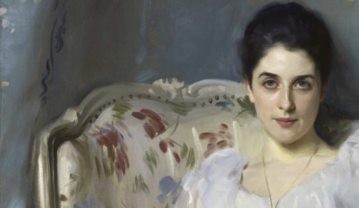
Ellen Terry as Lady Macbeth, Portrait of Ena Wertheimer: A Vele Gonfie, W. Graham Robertson, Carnation, Lily, Lily, Rose, 1885–6, and A Nude Boy on a Beach
Sargent Season: The Tate Britain
I want to preface this one by saying I have absolutely no photos for this post, and that is entirely on me. I stumbled into Tate Britain one afternoon after class, no camera, no plan, just myself and my bag, and I genuinely did not expect to find anything. I was at the museum for a class trip and didn’t even remember that it was a part of the hunt until I literally found myself standing in front of him!
That moment, the realization that you have accidentally walked into something you have been looking for, is one of my favorite feelings in a museum. It is better than planning for it, honestly. You round a corner and your brain goes quiet for a second and then very loud, and you just stand there being a little embarrassed about how much you care.
So. Tate Britain. Let’s do it.
Room 11
This is where most of the Sargents live, and Room 11 does not ease you in gently. Ellen Terry as Lady Macbeth stopped me completely. It is enormous and it is almost uncomfortable in how alive it is. Terry is mid-coronation, lifting the crown above her head, and Sargent has painted her in this iridescent beetle-wing dress that does not look like fabric so much as something that breathes. She is not performing for you. She is performing for herself, or for some version of power that has nothing to do with the audience. I stood in front of it for a long time.
W. Graham Robertson is the quieter counterpart in the room, and I think that is why I love it so much. Robertson was young when Sargent painted him, tall and a little folded in on himself, holding a cane and wearing this long black coat that Sargent apparently argued with him about keeping on even in the summer heat. The coat won. The whole painting has this quality of someone who is slightly too interesting for the room they are standing in, which, if you know anything about Robertson, is accurate.
And then there is the Ena Wertheimer, the one subtitled A Vele Gonfie, which translates roughly to full sail. She is sweeping toward you in a white dress, arm outstretched, head turned, and the whole thing moves. It is the painting in this room that most feels like it might walk away if you look somewhere else.
Room 8
Carnation, Lily, Lily, Rose is one of those paintings that feels like a secret even when it is hanging in a major national collection. Two children in a garden, lighting paper lanterns at dusk, and the light is this color that should not be possible in oil, that specific not-quite-dark of an English summer evening. Sargent painted it over two consecutive autumns, working in tiny windows of about twenty minutes when the light was exactly right. You can feel that. It has the quality of something caught rather than constructed.
Room 9
A Nude Boy on a Beach is the smallest thing here and possibly the one I thought about longest after I left. It is an early work, 1878, and it is so loose and sure at the same time. A child on sand, painted like Sargent, was just trying to see if he could get the light right before it changed. No drama, no performance. Just a boy and the sea and someone paying very close attention.
I went back through all five on my way out. No camera, no notes, just looking. Maybe that is the way to do it, honestly. Read this series, let it sit for a few months, forget about it a little, and then find yourself in a room you were not planning to be in, in front of something you were not planning to see, realizing your brain had been holding onto it the whole time. Perhaps the hunt has always been on…
Leave a Reply